 ultimate-guide
Property Due Diligence Checklist Sydney: 2026 Guide
Table of Contents
- Why Property Due Diligence in Sydney Is Different
- Step 1: Title Search, Ownership Verification and Encumbrances
- Step 2: Zoning, Planning Certificates and Development Applications
- Step 3: Building and Pest Inspection Cost and What It Covers
- Step 4: Strata Report Requirements for Apartments and Townhouses
- Step 5: Contract for Sale Review Before You Sign
- Off-the-Plan vs Established Property: How Due Diligence Shifts
- Conclusion: Your Pre-Exchange and Post-Exchange Checklist
- Frequently Asked Questions
Last Updated: September 12, 2026
Why Property Due Diligence in Sydney Is Different
Property due diligence is the investigative work a buyer completes before committing to a purchase, covering title, zoning, building condition, strata records and contract terms. In Sydney, that work carries extra weight: the market moves fast, stock in the Eastern Suburbs is tightly held, and a single overlooked caveat or unapproved renovation can cost six figures to fix.
This guide from Thomson. Buyers Agency walks through the full property due diligence checklist sydney buyers need in 2026, from title search to post-exchange steps. At Thomson. Buyers Agency, we run this process for first home buyers, upgraders and overseas investors.
Here is what most guides get wrong: they treat due diligence as a single inspection. It is a sequence, and the order matters.
Step 1: Title Search, Ownership Verification and Encumbrances
A title search confirms who owns the property and what is registered against it. Order it through NSW Land Registry Services before you exchange, not after.
What to check on the title:
- Registered proprietor matches the vendor
- Encumbrances, including mortgages and caveats
- Easements affecting access, drainage or services
- Restrictive covenants limiting what you can build
Caveats, Easements and Covenants to Flag
A caveat signals a third party claims an interest in the property. Never exchange until the vendor explains it and your solicitor confirms it will be removed at settlement.
Easements give others rights over part of the land, such as drainage or access. They can rule out extensions or pools. Covenants are private restrictions, often decades old, that may ban dual occupancies or certain materials. A common mistake is assuming a covenant has lapsed because neighbours have built anyway. It has not.
Step 2: Zoning, Planning Certificates and Development Applications
Zoning determines what you can do with the land, and the planning certificate is where you confirm it. In NSW, this is the section 10.7 certificate (formerly section 149), issued by the local council and split into Part 1 and Part 2 (nsw.gov.au).
Part 2 matters most. It discloses flood status, bushfire prone land, heritage listings, road widenings and other restrictions that never appear in marketing photos.
For any property with development potential, also search the council's DA register. It shows what neighbours have lodged, which tells you more about the street's future than any agent's estimate.
Flood Zone and Bushfire Prone Land Checks
Flood and bushfire notations change your insurance premiums, your building costs and sometimes your ability to build at all. If the certificate flags either, get an insurance quote before you exchange. Premiums on flood-affected land can add thousands a year, and some insurers decline cover outright.
Step 3: Building and Pest Inspection Cost and What It Covers
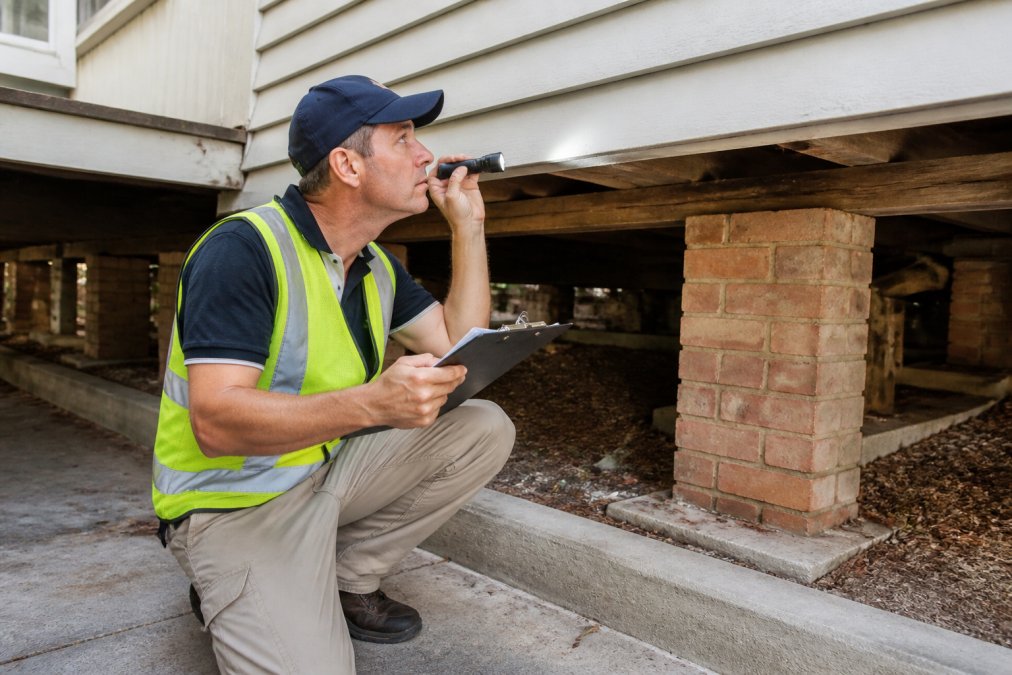
Building and pest inspection cost typically ranges from a few hundred dollars for a standard house to over a thousand for large or complex properties, depending on size, age and access. Treat it as the cheapest insurance you will ever buy.
A combined building and pest report covers structural defects, moisture and drainage issues, roof and subfloor condition, and active termite activity or damage. It is not a guarantee, and inspectors cannot see inside walls.
Step 4: Strata Report Requirements for Apartments and Townhouses
Strata due diligence is a different discipline from house due diligence. In a strata scheme, the owners corporation owns and maintains the common property, roof, external walls, floors, lifts, plumbing stacks and often windows, so a standard building inspection tells you very little about the defects that will actually cost you money. The strata records do.
In NSW, the vendor must attach a strata inspection report (sometimes called a section 184 report) to the contract of sale for most strata lots (nsw.gov.au). That report is a starting point, not a substitute for your own inspection. Order your own strata inspection report through a specialist strata search firm, and budget a few hundred dollars for a standard scheme; larger or older schemes with extensive records cost more.
What to Request From the Owners Corporation
Ask for the full records, not a summary. At minimum:
- Minutes of owners corporation and executive committee meetings for the last two years, these reveal disputes, defect claims, insurance issues and planned works that never appear in the marketing material.
- Financial statements and the administrative and sinking fund balances, a healthy sinking fund is your buffer against future levies.
- The 10-year capital works plan (required under NSW strata law), this is where you see whether a major expense is already scheduled.
- Special levies struck or proposed, and any outstanding loans.
- Building defects and litigation, including claims against the builder or developer and any proceedings in the NSW Civil and Administrative Tribunal (NCAT).
- By-laws, especially those restricting pets, renovations, short-term letting and flooring.
- Insurance certificates, building, public liability and workers compensation.
- Fire safety and compliance certificates, including annual fire safety statements.
The Red Flags That Matter Most
A scheme can look immaculate in the foyer and still be a financial trap. Watch for:
- A sinking fund that is too low for the age and size of the building. A 30-year-old high-rise with a $50,000 sinking fund is a warning, not a bargain.
- Recurring special levies. One levy can be bad luck; two or three in five years suggests the scheme is underfunded.
- Defect claims against the builder. These can take years to resolve, and owners often fund legal costs through levies in the meantime.
- A high proportion of investor-owned or short-term-let units. This affects by-law enforcement, insurance and the scheme's culture.
- Minutes that record the same maintenance issue repeatedly without resolution.
Timing and Cost
Strata searches typically take a few business days, and the cost varies with the size of the scheme and the volume of records. Build this into your pre-exchange timeline: in a fast market, the strata search is often the longest lead-time item after the building and pest inspection. If the vendor's contract includes a strata inspection report, read it critically, it is prepared for the vendor, not for you.
Strata vs Torrens Title: What Changes
If you are buying a townhouse or villa in a community title or company title scheme, the due diligence shifts again. Company title, in particular, means you are buying shares in a company rather than a lot, and the company's constitution governs your rights. These structures are less common but still appear in older parts of the inner city and the lower north shore. They require legal advice specific to the structure, not a standard strata search.
Step 5: Contract for Sale Review Before You Sign
Contract for sale review is where your solicitor earns their fee. The contract includes the title, plan, planning certificate and prescribed warranties, and you get a five-business-day cooling-off period in most NSW residential sales.
Never sign without legal advice. Key items to confirm:
- Inclusions match what you inspected
- Special conditions protect you, not just the vendor
- Settlement period suits your finance approval
- Deposit structure and release terms are clear
Your finance must be unconditional before cooling-off ends, or you risk losing your deposit.
Off-the-Plan vs Established Property: How Due Diligence Shifts
Most due diligence checklists are written for established homes, where you can inspect what exists. Off-the-plan purchases invert the process: you are buying a promise, and the due diligence is about the developer, the contract and the statutory protections, not the building, because it does not exist yet.
This is the section most guides skip, and it is where Sydney buyers lose the most money.
What You Can and Cannot Inspect
For an off-the-plan apartment or townhouse, there is no building to inspect, no strata records to search and no history of levies or defects. Instead, your due diligence focuses on:
- The developer's track record. Search for completed projects, any history of defects, and whether the same entity has been involved in insolvencies or phoenix activity. ASIC's registers and the NSW Office of Fair Trading are starting points.
- The disclosure statement. In NSW, the developer must give you a disclosure statement with the draft plan, schedule of finishes and by-laws before you sign. Read it against the marketing material, finishes, appliances and dimensions are often downgraded between the display suite and the completed build.
- The sunset clause. This is the date by which the developer must complete. In NSW, changes to the Conveyancing Act have tightened the rules around sunset clauses in off-the-plan residential contracts, but the clause still determines your exposure if the project runs late. Understand what happens to your deposit if the sunset date passes.
- The strata scheme's proposed by-laws. These are drafted before the scheme exists and can restrict pets, short-term letting and renovations. Once the scheme is registered, changing by-laws requires a special resolution, you cannot simply vote them away.
- The building's proposed management and insurance arrangements. Who will be the strata manager? What insurance is proposed? These affect your ongoing costs.
The Statutory Protections You Should Know
NSW offers off-the-plan buyers some protections that do not exist in every state. The cooling-off period for off-the-plan contracts is longer than for established homes, and there are specific disclosure obligations on the developer. If the developer makes a material change to the disclosure statement, for example, a significant change to the plan or finishes, you may have a right to rescind. These rights are technical and time-limited, so they must be checked by your solicitor before you sign, not after.
Established Property: The Advantage of Inspecting What Exists
Established homes let you inspect the building, search the strata records, check the title and see the street as it actually is. That does not make them risk-free, unapproved renovations, undocumented easements and deferred maintenance are common, but the risks are visible and quantifiable before you exchange.
For most buyers, the trade-off is straightforward: off-the-plan offers a newer building and potential stamp duty concessions, but you accept construction risk, settlement timing risk and the risk that the finished product differs from the plan. Established property offers certainty of inspection, but you inherit whatever the previous owner did or did not maintain.
A Practical Rule
If you are considering off-the-plan, do not sign anything until your solicitor has reviewed the disclosure statement, the sunset clause and the special conditions, and you have independently verified the developer's track record. If you are buying established, do not skip the building and pest inspection or the strata search to save a few hundred dollars, those reports are the cheapest part of the transaction and the most likely to save you six figures.
Conclusion: Your Pre-Exchange and Post-Exchange Checklist
| Stage | Action | Frequency |
|---|---|---|
| Pre-offer | Title search, zoning certificate, price research | Once per property |
| Pre-exchange | Building and pest, strata report, contract review | Once per property |
| Pre-settlement | Final inspection, finance confirmation, insurance | Once per property |
| Post-exchange | Arrange building insurance, book settlement | Once per property |
The hardest part of buying in Sydney is not finding a property. It is knowing when to walk away. Thomson. Buyers Agency provides independent advocacy, meticulous due diligence and expert negotiation, giving you a Trusted Buying Advantage from first inspection to settlement. Get started with Thomson. Buyers Agency and secure your next property with confidence.
Frequently Asked Questions
What should be included in a property due diligence checklist for a Sydney purchase?
A complete property due diligence checklist for a Sydney purchase covers a title search, zoning certificate, building and pest inspection, strata report if the property is under an owners corporation, contract of sale review, flood and bushfire checks, and a market value analysis. Each item is verified before you exchange contracts, so you know exactly what you are buying and what it will cost to maintain.
How much does a building and pest inspection cost in Sydney?
Building and pest inspection cost in Sydney depends on the property size, age and location, so quotes vary between providers. As a rough guide, a standard combined inspection on a house sits in the low hundreds of dollars, with larger or older properties costing more. Always request a fixed quote in writing and confirm the inspector carries professional indemnity insurance before booking.
What do strata report requirements involve for a Sydney apartment?
Strata report requirements centre on the owners corporation records for the last two to five years. The report should reveal levies, special levies, sinking fund balance, insurance, building defects, litigation, by-laws and any planned major works. In NSW, you can also request a strata inspection report through the owners corporation or its managing agent, usually within 14 days of your written request.
Why is a contract for sale review essential before exchange?
A contract for sale review identifies inclusions, exclusions, easements, covenants and any special conditions that could affect your rights. In NSW, the vendor must attach a title search, plan, zoning certificate and drainage diagram. A solicitor or conveyancer checks these documents and can negotiate conditions, such as subject to finance or subject to building and pest, before you sign.
What is the difference between a cooling-off period and unconditional exchange?
In NSW, a cooling-off period of five business days applies to private treaty sales after exchange, giving you time to complete inspections and finance. Unconditional exchange means you have waived that right and are legally bound to settle. Auctions have no cooling-off period, so all due diligence must be finished before the hammer falls.
How do I check for zoning restrictions and development applications?
Order a zoning certificate, also called a section 10.7 planning certificate, from the local council. It confirms the zoning, permitted uses, heritage status and any affected roads or bushfire prone land. You can also search the council's development application register and the NSW Planning Portal for nearby proposals that may affect your property's value or amenity.