 how-to
How to Verify an Independent Buyer Agent
Table of Contents
- Why Verifying Your Buyer Agent Matters
- Step 1: Check the Buyer's Agent Licence Check via State Register
- Step 2: Verify Independence and Identify Conflicts of Interest
- Step 3: Ask Critical Questions to a Buyer's Agent
- Step 4: Review Professional Indemnity Insurance and Accreditation
- Understanding Buyer's Agent Fee Structure Explained
- Red Flags and Common Verification Mistakes
- Frequently Asked Questions
Last Updated: September 2, 2026
Why Verifying Your Buyer Agent Matters
Engaging an independent buyer agent should feel like a partnership built on trust, but trust isn't something you should extend blindly. The property market moves fast, stakes are high, and the wrong representation can cost you tens of thousands of dollars, or worse, lock you into a purchase you later regret. At Thomson. Buyers Agency, we understand how critical it is that buyers know exactly who they're working with and whether that agent truly has their interests at heart.
The challenge is that "independent" doesn't have a single, universally enforced definition across all states. Some agents call themselves independent while maintaining undisclosed relationships that create conflicts of interest. Others genuinely operate free from vendor commissions but lack proper credentials. Without verification, you're making one of the largest financial decisions of your life based on a handshake and a promise.
This guide walks you through the practical steps to verify an independent buyer agent, checking their licence, understanding their fee structure, spotting red flags, and asking the right questions before you sign anything. By the end, you'll know exactly how to evaluate whether an agent is truly independent and whether they're the right fit for your property purchase.
Step 1: Check the Buyer's Agent Licence Check via State Register
The first and most critical step is verifying that your buyer agent holds a current, valid real estate licence. This is non-negotiable. An unlicensed person claiming to represent you in a property transaction isn't just risky, it's illegal in most states.
Finding your state's regulatory body
Each state and territory in Australia maintains its own real estate licensing authority. The regulatory body varies by location:
- New South Wales: Check the Real Estate Institute of New South Wales (REINSW) register or the Fair Work Ombudsman for agent compliance
- Victoria: Verify through the Victorian Legislation and Regulation system
- Queensland: Consult the state's property licensing authority
- South Australia, Western Australia, Tasmania: Each maintains a separate register
Your buyer agent should be able to tell you immediately which register to check. If they hesitate or seem unclear about their own regulatory body, that's your first red flag.
What to look for on the register
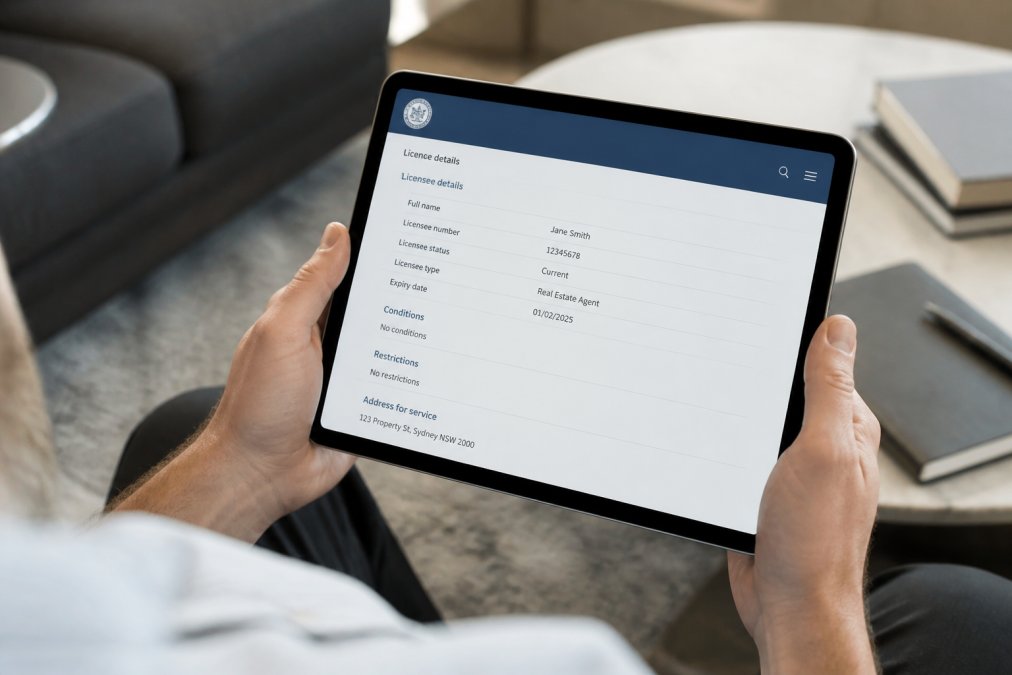
Once you've found the right register, search for your agent's name. A legitimate independent buyer agent will have:
- Active licence status (not suspended, expired, or cancelled)
- Buyer's agent accreditation specifically listed (not just general real estate agent status)
- Current registration date with no gaps or lapsed periods
- No disciplinary history or complaints recorded against their name
- Professional indemnity insurance noted as current and valid
Many registers also show the agent's office address, licence number, and any conditions attached to their licence. Write down the licence number, you'll need it if you ever need to lodge a formal complaint.
Don't just skim the results. Spend time reading the full entry. Some registers include notes about complaints, investigations, or restrictions that won't show up in a quick search. If something looks unclear, contact the regulatory body directly and ask them to clarify.
Step 2: Verify Independence and Identify Conflicts of Interest
A licence proves your agent is qualified. But it doesn't prove they're actually independent. This step is where you dig deeper into whether their financial incentives align with yours.
Exclusive versus independent representation
The difference between exclusive and independent representation matters enormously. An exclusive buyer's agent works only for buyers and receives no commission from developers, vendors, or selling agents. An independent agent may work with both buyers and sellers, which creates potential conflicts of interest.
Thomson. Buyers Agency operates as an exclusive buyer's advocate, meaning our entire fee structure depends on serving your interests, not on steering you toward properties that pay us commissions. This alignment is what "independent" should actually mean.
Ask your prospective agent directly: "Do you ever receive commissions from developers, vendors, or selling agents?" Listen carefully to the answer. A truly independent buyer agent will say no. If they say yes, ask them to disclose exactly what circumstances trigger those commissions and how much they typically receive. Many agents claim independence while quietly accepting vendor commissions, the practice is legal if disclosed, but it's a conflict you need to know about.
Request a written statement of their fee arrangement. It should be clear, specific, and free of vague language. If it mentions "potential commissions from third parties," that's a red flag.
Commission structures and disclosure
Understanding how your buyer agent gets paid is essential to spotting conflicts. Common fee structures include:
- Flat fee: A fixed amount regardless of purchase price
- Percentage of purchase price: Typically 0.5-2% depending on the market and property type
- Hourly rate: Payment for time spent, regardless of outcome
- Combination model: A base fee plus a success bonus
Each structure has trade-offs. A percentage-based fee might incentivise your agent to push you toward higher-priced properties. A flat fee removes that incentive but might discourage thorough due diligence on lower-value properties. An hourly rate can feel expensive upfront but aligns well with your interests.
The key is that your fee structure should be disclosed in writing before you engage the agent. If they're vague about cost or suggest "we'll work that out later," walk away. Legitimate agents have transparent pricing.
Step 3: Ask Critical Questions to a Buyer's Agent
Before you sign an engagement letter, sit down (in person or via video) with your prospective buyer agent and ask these questions. Their answers will reveal a lot about their professionalism, experience, and whether they're genuinely independent.

1. How many properties have you helped clients purchase in the past 12 months? This tells you about their activity level and market knowledge. A buyer agent who's genuinely active in the market will have concrete numbers. Someone who's vague or defensive about this question may not have much recent experience.
2. Can you walk me through your due diligence process? A strong buyer agent will outline specific steps: property inspection protocols, pest and building reports, title searches, neighbourhood analysis, comparable sales research, and more. If their answer is generic or brief, they may not be thorough enough for a significant purchase.
3. Tell me about a time you advised a client against buying a property. What was the issue? This question separates agents who genuinely protect clients from those who just want to close deals. A good buyer agent will have at least one story about walking away from a property or recommending their client do so. If they can't think of an example, they may prioritise closing deals over your interests.
4. How do you handle situations where the vendor's agent pressures you to move quickly? Competitive markets create pressure to bid fast. A buyer agent worth their fee will have strategies to resist that pressure and ensure you have time for proper due diligence. Their answer should include concrete tactics, not just reassurance.
5. What's your experience with properties in my target area? Whether you're buying in the Eastern Suburbs or another region, your agent should know the local market deeply. They should be able to discuss recent sales, price trends, school catchments, transport, and neighbourhood characteristics without hesitation.
6. Can you provide references from recent clients? Any reputable buyer agent will have clients willing to speak about their experience. Ask for at least two references and actually contact them. Ask about the agent's responsiveness, whether they felt the agent was truly independent, and whether they'd hire them again.
Step 4: Review Professional Indemnity Insurance and Accreditation
Professional indemnity insurance protects you if your agent makes a mistake that costs you money. It's not optional, it's essential. Before you engage, verify that your buyer agent has current, adequate professional indemnity insurance.
Ask to see a copy of their insurance certificate. It should show:
- Current coverage dates (not expired)
- Adequate coverage limit (typically at least $1-5 million for property transactions)
- Coverage for buyer's advocacy services (some policies exclude certain services)
- No exclusions that would prevent you from claiming if something goes wrong
Beyond insurance, check whether your buyer agent holds accreditation from industry bodies. In Australia, relevant accreditations include membership with the Real Estate Institute of your state or professional buyer's advocacy associations. These bodies maintain standards and provide dispute resolution if something goes wrong.
Accreditation doesn't guarantee quality, but it does signal that the agent has met minimum standards and is subject to a code of conduct. An agent without any industry accreditation is riskier.
Understanding Buyer's Agent Fee Structure Explained
One of the most common questions first-time buyers ask is how much a buyer's agent actually costs. The answer depends on several factors, but understanding the models will help you evaluate whether the fee represents good value.
Buyer's agent fees vary significantly based on the property price, your location, market conditions, and the agent's experience level. Rather than guessing at costs, the best approach is to get a detailed quote in writing from any agent you're considering. This quote should specify exactly what services are included, when payment is due, and whether there are any additional costs.
When comparing fees across different agents, don't just look at the percentage or flat amount. Consider what's included: market analysis, property inspection coordination, due diligence reports, negotiation services, contract review, and post-purchase support. A slightly higher fee might deliver significantly more value if it includes comprehensive services.
Ask whether there are any conditional fees or success bonuses tied to achieving a certain purchase price. Some agents offer discounts if you don't purchase, or bonuses if they negotiate a price below your target. These arrangements should be clearly documented in your engagement letter.
Also clarify payment timing. Most buyer agents charge a fee at settlement, but some require a deposit upfront. If an agent demands full payment before they've done any work, that's unusual and warrants caution.
Red Flags and Common Verification Mistakes
Even experienced property buyers can miss warning signs when they're eager to move forward. Here are the red flags that should make you pause and verify more carefully.
Red Flag 1: Vague or evasive answers about independence. If your agent can't clearly explain how they're paid or whether they receive vendor commissions, they're either hiding something or they don't understand their own business model. Either way, that's a problem.
Red Flag 2: Pressure to move quickly without due diligence. A buyer agent who rushes you through inspections, skips building reports, or pushes you to bid before you're ready isn't protecting your interests. Legitimate agents insist on proper due diligence even in competitive markets.
Red Flag 3: No written engagement letter. Verbal agreements are worthless in property transactions. Your buyer agent should provide a written engagement letter that outlines their fee, services, duration, and terms. If they resist putting it in writing, walk away.
Red Flag 4: Unlicensed or uninsured operation. If you can't verify their licence on the state register or they can't produce proof of professional indemnity insurance, they're operating outside the law. Don't engage them.
Red Flag 5: Unwillingness to provide references. A buyer agent who won't give you contact details for recent clients is hiding something. Insist on references and actually call them.
Red Flag 6: Undisclosed relationships with developers or agents. Some buyer agents have financial relationships with certain developers or selling agents that influence which properties they recommend. This should be disclosed upfront. If you discover a hidden relationship later, you've been misled.
Red Flag 7: No clear process or methodology. When you ask about their due diligence process or how they approach negotiations, their answer should be detailed and specific. Generic responses suggest they don't have a rigorous system.
Common verification mistakes include:
- Assuming a licence check is enough (it's not, you also need to verify independence and fee structure)
- Trusting online reviews without checking the source (some reviews are fake or from competing agents)
- Skipping the reference check because you like the agent personally (personality isn't a substitute for competence)
- Not getting the fee agreement in writing (verbal promises are unenforceable)
- Failing to ask about conflicts of interest directly (assume nothing, ask everything)
Verifying an independent buyer agent takes time, but it's time well spent. The agent you choose will influence one of the largest financial decisions of your life. By checking their licence, understanding their fee structure, asking critical questions, and reviewing their insurance and accreditation, you'll have confidence that you're working with someone genuinely committed to your interests.
Thomson. Buyers Agency operates with complete transparency about fees, independence, and process. We're committed to giving you the Trusted Buying Advantage through meticulous due diligence, strategic negotiation, and expert guidance from start to finish. If you're ready to work with a buyer agent who puts your interests first, get in touch to discuss how we can help secure your ideal property.
Frequently Asked Questions
Q: How do I check if a buyer's agent is licensed?
A: Contact your state's real estate regulatory body, each state maintains a public register of licensed agents. Search the agent's name and verify their certificate of registration is current and active. This is the most direct way to confirm a buyer's agent holds a valid licence and meets compliance requirements set by your state government.
Q: What questions should I ask a buyer's agent before engaging them?
A: Ask about their experience in your target market, how they manage conflicts of interest, what their fee structure is, whether they carry professional indemnity insurance, and what written agreement covers the engagement. Request references from past clients and clarify what services are included in their fee. A reputable buyer's agent should provide transparent answers and a detailed engagement letter.
Q: What does 'independent' really mean for a buyer's agent, and how can I verify it?
A: An independent buyer's agent works exclusively for you, the buyer, not the seller or developer. Verify independence by asking whether they receive commissions from vendors, developers, or lenders. Request a written disclosure of any conflicts of interest. Check their engagement letter to confirm exclusive representation and that they have no financial incentive to steer you toward particular properties or developers.
Q: Should a buyer's agent disclose their fee structure, and what should I expect?
A: Yes, transparency is essential. A reputable buyer's agent should clearly explain their fee structure in writing before you engage them. Fees vary by service scope and negotiation; some charge a percentage of the purchase price, others charge a flat fee or hourly rate. Always request a written quote and confirm what services are included so you understand the total cost of their representation.
This article was written using GrandRanker