 ultimate-guide
How to Secure Investment Property: 2026 Step-by-Step Guide
Table of Contents
- Step 1: Assess Your Borrowing Capacity and Credit Score
- Step 2: Build Your Deposit and Understand Loan-to-Value Ratio
- Step 3: Using Equity to Buy Investment Property
- Step 4: Get Pre-Approval Before You Start Inspecting
- Step 5: How to Calculate Rental Yield Before You Make an Offer
- Step 6: Complete an Investment Property Due Diligence Checklist
- Step 7: The Benefits of Using a Buyer's Agent for Investment
- Step 8: Negotiate, Exchange and Settle on Your Investment Property
- Frequently Asked Questions
Last Updated: September 18, 2026
Step 1: Assess Your Borrowing Capacity and Credit Score
Borrowing capacity is the maximum a lender will let you borrow, based on your income, expenses, debts and credit history. Knowing it before you inspect a single property is the difference between a focused search for a secure investment property and months of wasted weekends.
Lenders assess your debt-to-income ratio, living expenses and existing credit limits, then apply an interest rate buffer above the current market rate.
Step 2: Build Your Deposit and Understand Loan-to-Value Ratio
Your deposit and loan-to-value ratio (LVR) determine your borrowing costs and negotiating position. LVR is the loan amount divided by the property's value, so a $600,000 loan on a $750,000 property is an 80% LVR.
Budget for costs beyond the deposit:
- Stamp duty and transfer fees
- Conveyancing and legal costs
- Building and pest inspections
- Loan establishment fees
Step 3: Using Equity to Buy Investment Property
Using equity to buy investment property means borrowing against the increased value of a property you already own to fund a deposit or costs on the next one. It is the fastest route to a second property for most established owners.
How Equity Release Works and What Lenders Look For
Equity is your property's value minus what you owe. If your home is worth $900,000 and you owe $500,000, you hold $400,000 in equity. Lenders typically let you access up to 80% of the value without triggering mortgage insurance.
Step 4: Get Pre-Approval Before You Start Inspecting
Pre-approval is a lender's written indication of how much it will lend you, subject to a satisfactory valuation. It is not a guarantee, but it tells sellers you are serious.
Step 5: How to Calculate Rental Yield Before You Make an Offer
Rental yield is the annual rental income a property returns as a percentage of its purchase price, the fastest way to compare two properties on income rather than emotion.
Gross vs Net Yield: Which Number Matters
Gross yield ignores costs. Net yield subtracts ongoing expenses such as council rates, strata levies, insurance, management fees and maintenance, then divides by the purchase price. Net yield reflects your actual cash flow.
| Yield Type | Formula | What It Tells You |
|---|---|---|
| Gross yield | Annual rent ÷ price × 100 | Quick comparison across listings |
| Net yield | (Annual rent − expenses) ÷ price × 100 | Real cash flow after holding costs |
Step 6: Complete an Investment Property Due Diligence Checklist
Due diligence is the investigation you complete before you are contractually bound. Skipping it is the most expensive shortcut in property: every defect found before exchange is a negotiating tool, and every defect found after settlement is your bill.
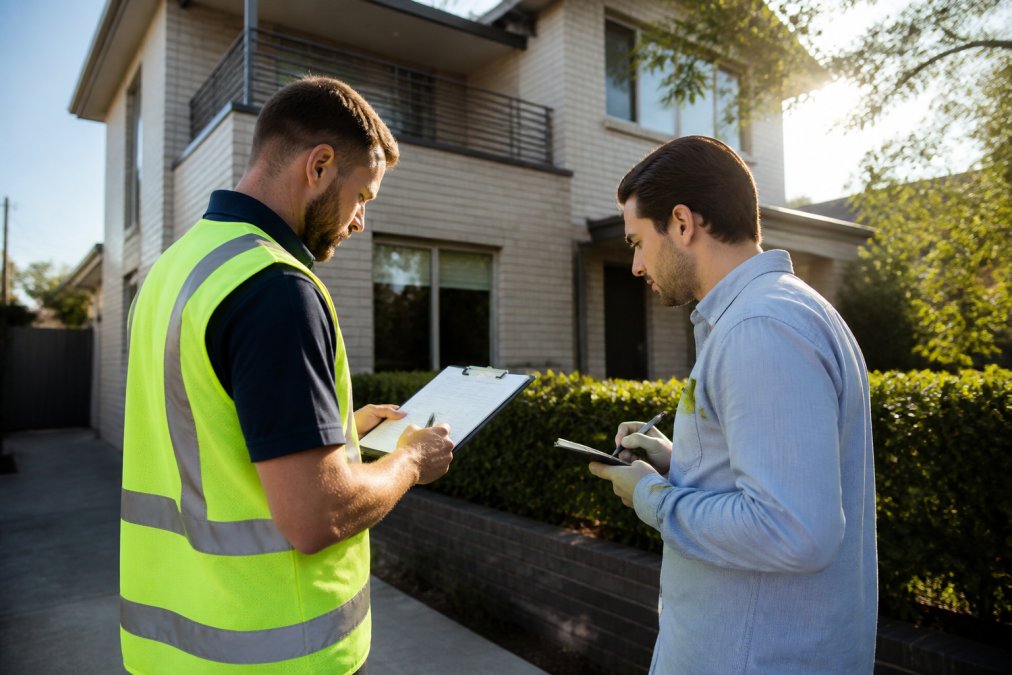
Work through this checklist before you exchange:
- Building and pest inspection report reviewed
- Strata report examined for defects, levies and litigation
- Title search and plan review completed
- Council zoning and planned developments checked
- Rental appraisal obtained from two local agents
- Vacancy rate for the suburb confirmed
- Landlord insurance quotes gathered
- Depreciation schedule requested from a quantity surveyor
What Each Check Actually Tells You
A building and pest inspection is not a pass/fail test but a priced list of problems. Major structural defects, rising damp, termite activity and non-compliant renovations carry remediation costs you can use to renegotiate or walk away. Ask the inspector to rank defects by urgency with a rough cost range for each.
Risk Mitigation: Stress-Test Before You Commit
The step that separates a prepared investor from the owner of a secure investment property is stress-testing the numbers before exchange.
Run three scenarios on a spreadsheet:
- Interest rate rise. Recalculate your repayments at two percentage points above your current rate. If the property no longer covers its own costs and you cannot fund the shortfall from income, your buffer is too thin.
- Vacancy period. Assume eight to twelve weeks with no tenant, plus a letting fee and a small refresh between tenancies. Can you carry the mortgage, rates, insurance and management fees through that period without selling?
- Maintenance shock. Set aside an annual maintenance provision of roughly 1% of the property's value. A $700,000 property implies about $7,000 a year in average upkeep. A single hot water system, roof repair or air-conditioning replacement can consume a year's provision in one hit.
What to Verify Before You Exchange Contracts
Confirm the title is clear, boundaries match the plan, and easements or covenants will not restrict your plans. Check whether the property sits in a flood or bushfire zone, which affects insurance and resale. Verify the vendor's disclosure documents against your own searches.
Step 7: The Benefits of Using a Buyer's Agent for Investment
A buyer's agent acts solely for you, not the seller, and is paid by you. That independence is the core benefit: their incentive is your outcome, not a fast sale.
Step 8: Negotiate, Exchange and Settle on Your Investment Property
Negotiation is where the price is won or lost. Anchor your offer to comparable sales, the rental appraisal and any defects the inspection uncovered, not to the asking price.
How to Negotiate as an Investor
Before you offer, assemble three to five genuinely comparable sales from the last three to six months, adjusted for land size, condition, bedroom count and proximity to transport. That adjusted range is your evidence, and evidence moves a vendor.
Exchange, Cooling-Off and Settlement
Once terms are agreed, contracts exchange and the cooling-off period begins. Its length varies by state and territory, and cooling-off rights sometimes do not apply at auction. During this window your solicitor completes conveyancing, your lender finalises the valuation and your loan is formally approved.
After Settlement: The First 90 Days
Set up ongoing costs immediately: landlord insurance, property management and a maintenance buffer. Engage a property manager before settlement so the property can be advertised and tenanted without a gap.
Scaling from Property One to Property Two
A practical sequence looks like this:
- Year one. Stabilise the first property. Build a cash buffer of at least three months of holding costs.
- Year two to three. Have the property revalued. If the market has moved in your favour, your usable equity may have grown enough to fund a second deposit.
- Before the second purchase. Review your serviceability with a broker. Lenders assess your total debt, not just the new loan, and rental income is typically shaded to around 80% of the actual rent when calculating borrowing capacity.
- Diversify deliberately. Consider whether the second property should be in a different market, a different property type, or a different state to reduce concentration risk.
Refinancing later, once equity builds, funds the next purchase and restarts the cycle. The goal is not to buy more properties, but properties that each improve your overall position.
Frequently Asked Questions
How does using existing home equity help in securing an investment property?
Equity is the difference between your property's market value and what you still owe. If your home is worth $900,000 and you owe $500,000, you have $400,000 in equity. Most lenders let you borrow against a portion of that, often up to 80% of the property value without lender's mortgage insurance. You can use released funds for a deposit, stamp duty or other upfront costs. Lenders assess your serviceability, credit score and loan-to-value ratio before approving an equity release.
What are the initial costs involved in securing an investment property?
Budget for more than the purchase price. Upfront costs typically include stamp duty, conveyancing or legal fees, building and pest inspection reports, loan application fees, and lender's mortgage insurance if your deposit is under 20%. You may also pay a buyer's agent fee. Ongoing costs include landlord insurance, council rates, strata levies, property management fees and maintenance. Ask your mortgage broker or conveyancer for a full cost estimate before you commit to a purchase.
What role does a buyer's agent play in securing an investment property?
A buyer's agent works only for you, not the seller. They research the market, shortlist properties that match your brief, inspect them on your behalf, and negotiate the price. For overseas or time-poor buyers, they act as your local representative through inspections, due diligence and settlement. Their due diligence covers property valuation, rental yield estimates, vacancy rate trends and building reports. This independent representation can save you from overpaying or buying a property with hidden problems.
How do I assess the rental yield potential of a prospective investment property?
Start with gross yield: divide annual rent by the property's purchase price, then multiply by 100. A property renting for $650 per week ($33,800 per year) at a $750,000 purchase price gives a gross yield of 4.5%. Then calculate net yield by subtracting ongoing costs such as council rates, strata levies, landlord insurance, property management fees and maintenance from the annual rent before dividing. Net yield gives a clearer picture of what the property actually returns each year.
Securing your first investment property comes down to preparation, not luck: know your borrowing capacity, understand your equity, and complete due diligence before you commit. Thomson. Buyers Agency gives you a Trusted Buying Advantage through independent advocacy, meticulous due diligence and expert negotiation, so you can move with confidence in a competitive market. Get started with Thomson. Buyers Agency and secure the right investment property with a process built around your goals.